Learn the real timeline for Europe’s transition to T+1 settlement and operational challenges for collateral, securities lending, repo, and treasury teams.
Clearing Up the Biggest Misconception
Many market participants know that Europe is moving to T+1 settlement. Fewer know exactly when. Even fewer understand what must happen before the go-live date arrives.
The transition to T+1 is not simply a regulatory deadline. It is one of the largest post-trade transformation projects the European financial industry has undertaken in decades. For collateral management, securities lending, repo, treasury, and operations teams, preparation needs to begin long before the official switch, because the operational changes required are far more complex than the US experience suggested.
When Does T+1 Go Live in Europe?
The planned go-live date is October 11, 2027.
This timeline is being coordinated across three markets simultaneously: the European Union, the United Kingdom, and Switzerland. The transition is spearheaded by ESMA and the European Commission within the EU, the FCA in the UK, and FINMA in Switzerland, with the EU T+1 Industry Committee coordinating cross-market alignment. The coordinated timeline matters. If any market delays, settlement cycle mismatches between EU, UK, and Swiss markets would create FX timing gaps, collateral friction, and operational risk for cross-border participants.
The European roadmap designates 2026 as the “decisive year for readiness,” when firms must secure budgets, complete development, and conduct impact assessments. Industry-wide testing programs are scheduled to run throughout 2027, building toward the October go-live.
Don’t miss anything from T+1. Take your pass for the Collateral Management and Securities Lending Forum.
Why Europe’s Migration Is Different from the US
Many firms assume Europe will follow the same path as the US, which transitioned in May 2024.
Multi-currency settlement
It’s the most significant difference. The US transition was overwhelmingly domestic and USD-denominated. European institutions routinely trade across EUR, GBP, CHF, and USD, meaning a single portfolio can involve multiple FX settlements per trade. Under T+2, firms had 48 hours to manage FX conversion. Under T+1, that window compresses to roughly 8 hours, often while European teams are off-desk. The US experience showed that cross-border investors had 80% less time to manage FX trades and securities conversions, forcing many to borrow cash or post additional collateral to bridge timing gaps.
Cross-border infrastructure fragmentation
Cross-border infrastructure adds another layer. The US settles through a single CSD (DTCC). Europe relies on Euroclear, Clearstream, and 20+ national CSDs, each with different cutoff times, operational conventions, and interoperability challenges. Cross-border collateral transfers that currently settle in 1–3 days must compress into hours.
Regulatory coordination
Regulatory coordination across 27 EU member states, the UK and Switzerland requires unprecedented alignment. Any divergence in implementation timelines, technical standards, or regulatory interpretation creates operational gaps that firms must bridge individually.
Time zone compression
Time zone compression is particularly acute for institutions with global portfolios. Asian market trading hours feed into European settlement windows, creating tighter operational timelines than most firms currently manage.
Why T+1 Matters for Collateral Management
Most T+1 discussions focus on settlement mechanics. Collateral teams face much broader implications.
- Margin management becomes significantly more demanding. Less time to calculate, agree, and exchange margin means that manual margin call processes, which functioned under T+2 timelines, become bottlenecks. Firms that currently take 4–6 hours to respond to margin calls may find that timeline incompatible with T+1 settlement windows.
- Collateral mobility must accelerate. Assets need to move faster across counterparties, custodians, and market infrastructures. Cross-border collateral transfers that currently take 1–3 days become unacceptable when settlement compresses to one day.
- Liquidity planning requires greater real-time visibility. Firms need to know their available collateral inventory across all entities, accounts, and locations — not at end of day, but continuously. The gap between what a firm owns and what it can actually mobilise within hours becomes a critical operational risk.
- Operational resilience is tested in ways that T+2 never exposed. Manual reconciliation, email-based trade confirmations, spreadsheet-driven collateral allocation, and approval workflows that depend on individual availability all become failure points under compressed timelines.
The Hidden Risk: Being Compliant but Not Ready
The US experience revealed a critical distinction. Settlement failures spiked among firms that were technically “T+1 compliant” because downstream processes were not tested under compressed timelines. Dispute resolution still took 3 days. Manual overrides required approvals that came after cutoff times. Exception handling assumed breathing room that no longer existed.
A firm may pass every regulatory readiness assessment while still struggling with manual reconciliation dependencies, fragmented collateral inventory across legal entities, legacy settlement workflows built on T+2 assumptions, and inefficient exception management that cannot scale under time pressure. The difference between compliance and operational readiness will determine which firms navigate T+1 smoothly and which face settlement failures, margin penalties, and reputational damage on Day 1.
The T+1 Readiness Roadmap
Phase 1: Assessment (now through Q4 2026)
Firms should identify which workflows still depend on T+2 timing assumptions, map every manual process in the settlement chain, and quantify where the biggest operational bottlenecks exist. This includes auditing SSI data quality, counterparty information accuracy, and vendor readiness across collateral, settlement, and custody systems.
Phase 2: Design (Q1–Q2 2027)
Review and redesign settlement processes, collateral workflows, securities lending operations, repo processes, and funding models for T+1 compatibility. This phase should include defining handoff points between front, middle, and back office, establishing RACI charts for T+1 operations, and aligning escalation protocols.
Phase 3 : Testing (Q3 2026 through Q3 2027)
Industry-wide testing programs will run throughout 2027. Internal testing should begin earlier, focusing on settlement simulations with compressed timelines, failover scenarios when automation breaks, cross-border settlement tests across multiple CSDs, and exception management under time pressure. Firms should run live fire drills with real trades to identify gaps that lab testing misses.
Phase 4 — Go-Live Readiness (Q3 2027)
By the final quarter before go-live, firms should have completed operational testing, validated technology readiness with vendors, aligned all internal teams, established Day 1 escalation procedures, and built post-launch monitoring plans for the critical first 90 days.
What Should Firms Be Doing Today?
A practical T+1 preparation checklist for institutions at any stage of readiness:
Governance
Secure executive sponsorship for T+1 as a strategic initiative, not just an operations project. Establish cross-functional T+1 working groups with representation from front office, operations, treasury, risk, technology, and compliance.
Operations
Map all settlement workflows end-to-end, highlighting every manual step. Identify dependencies on T+2 timing assumptions. Document “Steve processes” — informal workarounds that rely on individual knowledge rather than documented procedures.
Technology
Assess vendor readiness for October 2027 delivery. Request specific release dates, pilot client references, and API documentation. Review system scalability under compressed settlement volumes.
Data
Validate SSI records for top counterparties. Measure data accuracy rates across collateral inventory systems. Clean counterparty information, settlement instructions, and eligibility schedules.
Cross-functional alignment
T+1 breaks if the front, middle, and back offices are not synchronised. Confirm handoffs, approval workflows, and escalation paths now — not during industry testing.
What T+1 Means for Securities Lending and Repo
The impact extends well beyond settlement mechanics into the core operations of securities finance.
Shorter recall timelines mean lenders recalling securities will expect a return within 24 hours rather than 48, creating inventory-scrambling among broker-dealers and borrowers. Increased settlement precision leaves no room for the late matching and manual corrections that currently absorb settlement breaks. Greater liquidity requirements stem from FX timing gaps, settlement cycle mismatches between T+1 and T+2 markets, and faster collateral substitution demands, all of which increase the need for readily available cash and HQLA buffers.
For securities lending and repo teams, T+1 becomes both an operational challenge and a strategic opportunity. Firms that automate recall management, pre-position collateral, and build real-time inventory visibility will gain a competitive advantage over those relying on manual processes.
How Leading Firms Are Preparing
Rather than treating T+1 as a compliance checkbox, leading institutions are using it as a catalyst for broader post-trade transformation. They are investing in collateral optimisation platforms that provide real-time visibility across all entities and accounts, automating trade affirmation and margin call workflows to eliminate manual bottlenecks, stress-testing intraday liquidity under compressed timelines, redesigning operating models to integrate collateral, treasury, and technology functions, and building post-launch plans that address the first 90 days after go-live.
The firms that will navigate T+1 successfully are not the ones with the best systems. They are the ones who found and fixed their operational gaps earliest.
Join the Industry Conversation
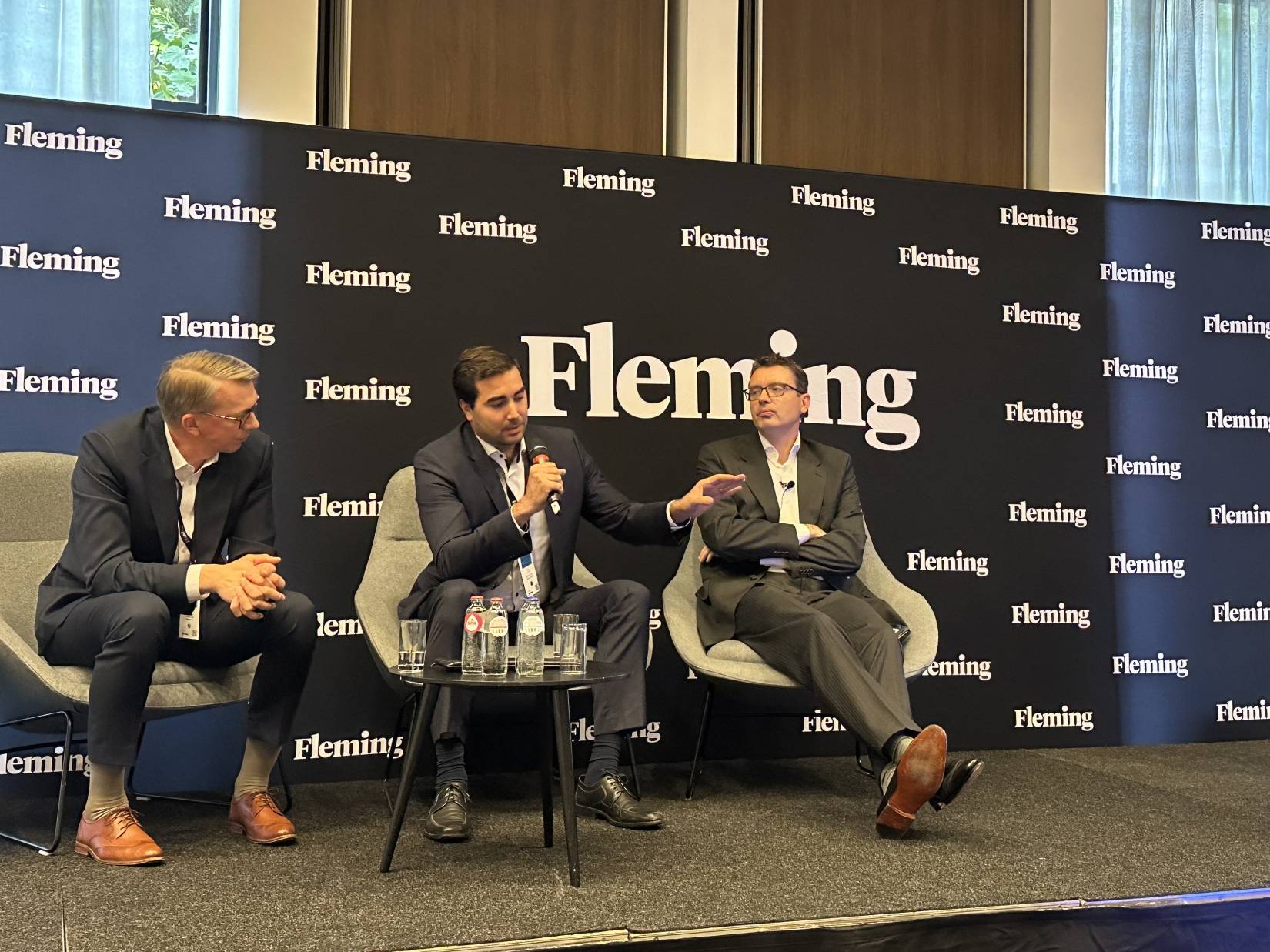
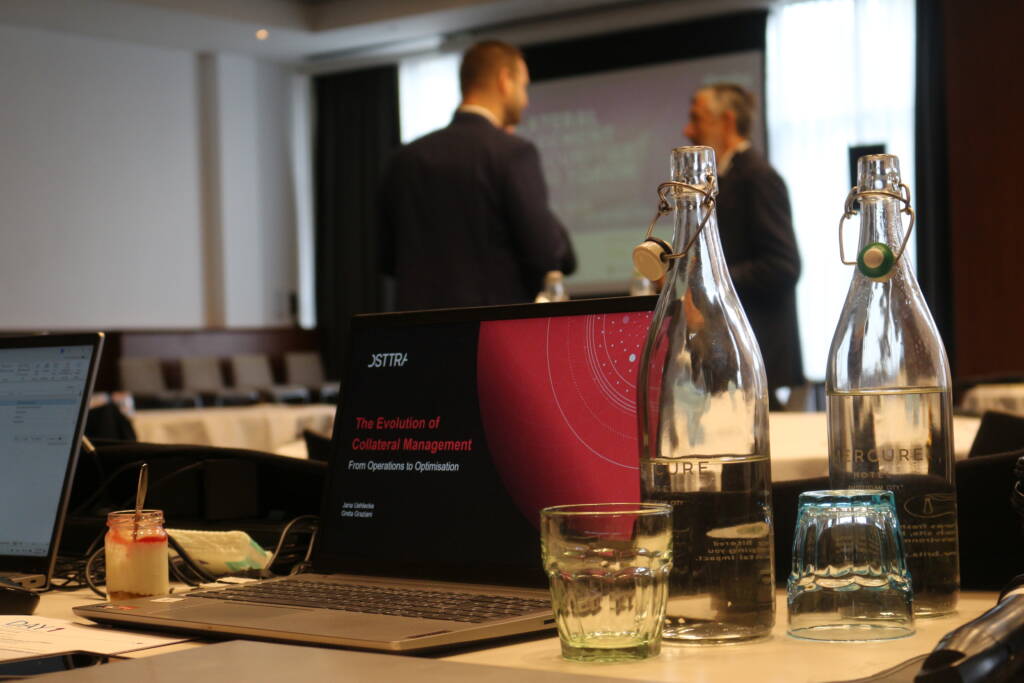
The transition to T+1 settlement will reshape collateral management, securities lending, repo, treasury, and post-trade operations across Europe. At the 20th Annual Collateral Management and Securities Lending Forum (October 21–22, 2026, Amsterdam), industry leaders will discuss T+1 readiness strategies, lessons from the US experience, collateral optimisation under compressed settlement, liquidity management frameworks, securities lending implications, and the design of operating models built for a T+1 world.
Review full agenda of the 20th Collateral Management Forum.
FAQ
The EU, UK, and Switzerland are coordinating a transition to T+1 settlement with a go-live date of October 11, 2027.
Preparation involves 4 phases: assessment of current workflows and manual dependencies, design of T+1-compatible processes across settlement, collateral, and securities lending operations, testing through internal simulations and industry-wide programs, and go-live readiness including escalation procedures and post-launch monitoring plans.
T+1 compresses the time available to calculate margin, mobilise collateral, and settle transfers. Manual collateral processes that functioned under T+2 became bottlenecks. Firms need real-time collateral inventory visibility, faster mobilisation capabilities, and automated margin call workflows to operate effectively under T+1.
T+1 shortens recall timelines from 48 to 24 hours, increases settlement precision requirements, creates greater liquidity demands from FX timing gaps, and requires faster collateral substitution. Securities lending teams must automate recall management and pre-position collateral to avoid operational disruption.
The primary challenges are multi-currency FX settlement timing, cross-border infrastructure fragmentation across European CSDs, manual process dependencies, data quality gaps in SSI and counterparty records, and the risk of achieving technical compliance without genuine operational readiness.
T+1 requires real-time visibility into available liquidity across all entities and accounts. FX settlement timing gaps — where equity settles T+1 but FX settles T+2 — create overnight funding needs. Firms must build intraday liquidity buffers and establish credit facilities to cover temporary shortfalls.
The Collateral Management and Securities Lending Forum, organised by Fleming Events, is Europe’s leading practitioner-focused conference covering T+1 readiness, collateral optimisation, securities lending, and repo markets. The 20th annual edition takes place October 21–22, 2026, in Amsterdam, featuring 20+ expert speakers and 120+ senior professionals.